

How Cost Segregation and Rental Grouping Work Together

How Cost Segregation and Rental Grouping Work Together

If Tuesday felt a little “CPA meeting in newsletter form,” today we’re taking it one layer deeper.

Because grouping your rentals is not the strategy.

It’s the door to the strategy.

And many investors stop at the door.

If you are a transformational professional building wealth intentionally, structure matters. As we often say, you want a strong, diversified investment portfolio, but most advice still centers around Wall Street. Real estate gives you different levers. Tax coordination is one of them.

What Grouping Actually Unlocks

When you group rental activities, you’re telling the IRS:

“This is one economic unit.”

That allows income and losses across properties to interact.

But here’s the real question:

Are you actively creating depreciation to maximize that benefit?

Enter: Cost Segregation

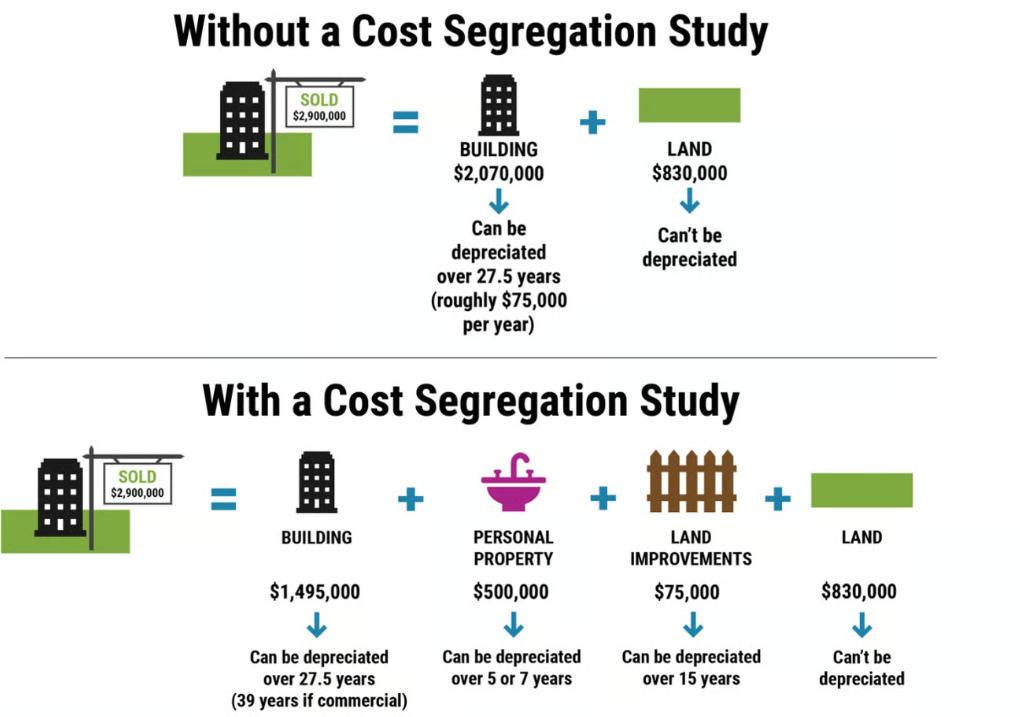
cost segregation study accelerates depreciation by breaking a property into components with shorter tax lives.

Instead of depreciating everything over 27.5 or 39 years, certain elements may be depreciated over 5, 7, or 15 years.

The result?

Front-loaded depreciation.

Which often means larger paper losses in early years.

If you own rental properties personally, and you are invested with us at StoneCrest Equity Partners, this is where coordination gets interesting.

Why This Matters for Long-Term Hold Investors

Many of you are in a long-term accumulation strategy.

You are not flipping.
You are not trading in and out.
You are building a portfolio.

Private real estate investments often generate depreciation in early years. Your personal rentals may generate steady taxable income.

Without grouping and planning:
• Depreciation may sit passive and unused
• Income may remain fully taxable
• Each property operates in isolation

With proper coordination:
• Income and losses can blend (subject to your tax profile)
• Accelerated depreciation becomes intentional
• Your portfolio acts like a portfolio, not random assets

This is advanced rental property tax planning.

Not aggressive.
Not gimmicky.
Structured.

The Strategic Question to Ask

SEP investors should be asking their CPA:

  1. Are my rental activities grouped appropriately?

  2. Should I consider cost segregation on my personally owned properties?

  3. How do my private real estate investments interact with my existing rentals?

This is especially important if:
• You are high income
• You are in accumulation mode
• You plan to hold assets long term
• You are reinvesting distributions

You work too hard to let your tax strategy default to autopilot.

The Bigger Picture

Real estate investing is not just about:
Buying property
Collecting rent
Receiving distributions

It is about coordinating assets, depreciation, and income over time.

The investors who build iconic wealth do not just acquire properties.

They align structure with strategy.

If you own rentals and are invested with us, or are considering adding private real estate investments to your portfolio, let’s have a conversation. We have several projects coming up that will drive paper losses in the umpcoming years. Ripe for creating tax savings.

Not because there is a trick.

Because coordination is where efficiency lives.

And efficiency compounds.